
The Abbey Argument
Updated: Jun 4
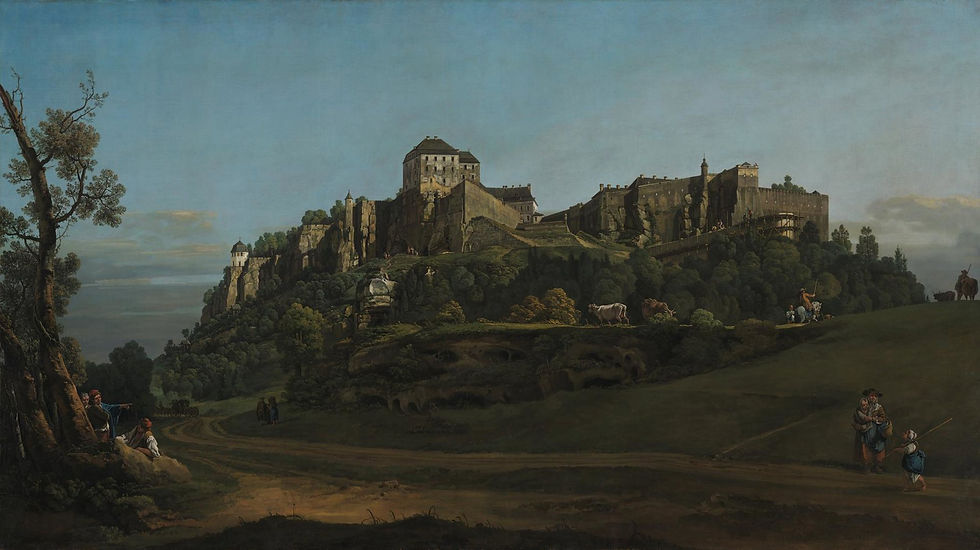
Excerpts from the Encyclopedia Britannica.
“...an abbey consists of a complex of buildings serving the needs of a self-contained religious community… The cloister linked the most important elements of the abbey together and also served the (residents) for their contemplative meditation;... The western side of the cloister provided for dealings with the outside world. There was the almonry, for example, where gifts of money or clothing were made to the poor, and guest rooms, cellars, and stables.… On the south side of the cloisters were a central kitchen, a brewery, and workshops for smiths, enamelers, coopers, shoemakers, and saddlers… Buildings for the intensive agriculture practiced by most orders were to the south of the other buildings.”
An issue we have frequently had while discussing what it is we are doing and planning and preparing for, here at the Abbey, has been a lack of understanding of what an Abbey even is and why we would have chosen this model.
I hope to clear that up a little bit.
So what is an Abbey?
An Abbey is at its heart a place of shared principle, one that seeks to preserve knowledge, teach that knowledge, and provide for the community around it and within it. It is both a model of sustainable communal life and an ethical bulwark against encroaching political unrest.
Put succinctly; It is an ark. A place built to weather the storms of a changing world.
I think, sometimes people see any type of institution that was developed in the past as antiquated. People tend to think that our ancestors were not as smart as we are. Or perhaps that they did not understand the world around them as well as we do and so they could not have come up with systems or institutions that would serve them as well as we could.
The simple fact of the matter is however, that people have not changed since 1500 CE or even 1500 BCE. We are the same creatures. We have not evolved in a few hundred years to be radically different than what we were. So when we are facing a problem that we have already found a solution for, or at the very least a problem we have figured out how to live through, we should probably pay attention to what our ancestors did.
Capitalism is dead.
Now I don't mean that it isn't constantly shaping our lives and making the world worse right at this moment. It is still doing that for certain. What I mean is that we have shifted from what people 100 years ago would have considered capitalism, into what could be described as Neofeudalism with lingering capitalist baggage.
The World isn't controlled by markets or by people controlling the means of production. It is controlled by lords.
Technocrats and the 1% have become the masters of the world. A new Monarchy determined not solely by heredity, but by a race to the bottom of the ethical pile. One not based on land but on global exploitation and extraction.
To see the mess we are in you need to transpose your understanding, from a historical perspective, of church and state.
Competitive Authoritarian regimes, the newly arising systems of governance replacing democracy around the world, have taken the place of the church in our new Techno-Capitalist-Feudalist (TCF) reality. By this I men they (and the parties that prop them up) have taken the role that the Catholic Church held in Western Europe during the original feudalist era. They build the modern systems of meaning, decide in-groups and out-groups, give moral weight and guidance on ethics, have an independent system of justice, and even dictate beliefs on such varied subjects as scientific understanding, medicine, linguistics, art, fashion, and countless other areas.
These TCF regimes with a Dictator/Pope as the head of political parties have become cults, They preach their own realities and require orthodoxy of thought and word. This will result in persecution for heresy and eventually "religious wars". They will not use this terminology. But that is what it will be. That is the level of discourse that we are at now because political thought has been supplanted by Pseudo State-Religion (PSR).
Rather than the church, being universal/global, in the new system the "church"PSR is localized to each nation and the real state of Techno-Capitalist-Feudalism is global.
We now have a one world government. It is not made up of parties or senators. It is made up of multinational corporations headed by our supreme monarchs the CEOs. They wage wars using the "church"(PSR) as their mouthpiece for justification. They control your housing. Your health care. Your food. Your transportation. The market. Art and media. Etc. Etc. Etc.
Your new monarchs control almost everything but respect no laws.
They flout the laws of the PSR just as Kings once flouted Bishops to show their supreme power and keep the "church" in check.
We have entered the new era of feudalism, and because we thought of church and state and market as static things rather than functions we missed it. The change passed us by widely unremarked upon.
Now there are certainly still religious institutions and faith based churches in the United States. That is readily apparent.
However large swaths of them have been converted to simple mouthpieces of the "Church" PSR. The evangelical church in America is one such institution that has devolved into a mystery cult that serves this mother church.
No church in the US holds a grip on our daily life like the Church of old. None but the PSR.
So I return to the question.
Why an Abbey?
Simply put, feudalism is the world we live in now.
Trying to pretend like it's something else won't help.
This is feudalism, you are a serf.
We all are.
So we must start organizing locally.
Start creating systems that will allow us and the people around us to survive neofeudalism.
We look to the wisdom of our ancestors.
The last time we went through this, it was in the middle of a mini-ice age.
Now we are going through it while dealing with climate change.
Last time they called it the dark ages.
Who knows what our descendants will call it.
But we have to call it home.
So we look at it without blinders on.
Accept what is happening.
Build for what is coming.
Plant trees we may never harvest.
We started an Abbey because it is an Ark, a way to help people understand our world better and a way to live in it better ourselves. We came to the recognition that if this is what the world looks like, then as people who wish to live ethically and intentionally in community, we can take a page from history and weather the storm.

Comments